
Local AI and the GDPR, AI Act and NIS2
Local AI processes documents, recordings and queries on hardware on your network, so data never goes to a cloud model provider. This helps you meet the GDPR, the AI Act, the Polish National Cybersecurity System Act (KSC), DORA and professional secrecy rules, but does not replace an AI policy, impact assessment or training. We deploy it with permissions, logs and updates and leave the legal assessment to your lawyer.
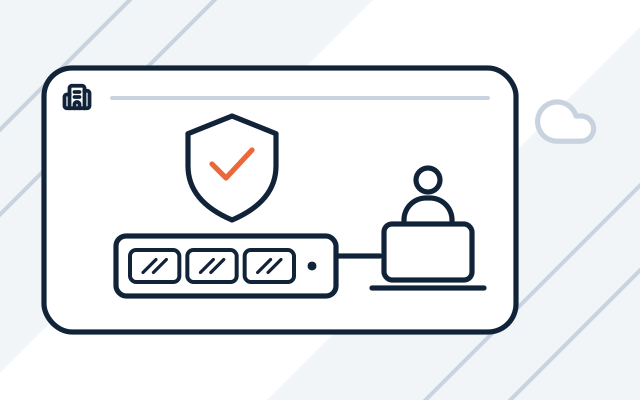
When companies ask about AI security
-

Staff use public AI chatbots
Company documents then go to services the company has no control over, often outside the European Economic Area. A local model gives your team a tool on the company network.
-

A client or auditor asks where the data goes
Confidentiality agreements, supplier security questionnaires and audits require an answer about who processes the data and where. With local AI, the answer is: on a server on your network.
-

Your company is covered by the KSC act or DORA
An AI server is one more part of the infrastructure covered by risk management. A local deployment does not add a cloud model provider to your supply chain.
-

Professional secrecy
Advocates and legal advisers, doctors, tax advisers and banks protect client and patient information. A local model processes it without passing it to an external AI service.
We describe the legal position as at 25 November 2026. AI regulations take effect in stages, so for each act we give the date and a link to the source. This description is not legal advice: your company’s obligations should be assessed by its lawyer or data protection officer.
What local AI makes easier and what remains your company’s responsibility
| Local AI provides | Your company does itself |
|---|---|
| data, queries and answers stay on the company network, with no transfer outside the EEA and no AI provider receiving the data | sets the legal basis for processing and informs the people the data relates to, such as participants in recorded meetings |
| the model does not learn from queries, and its version changes only when the company decides | carries out a data protection impact assessment where one is required |
| accounts, groups and document permissions from the company directory | adopts an AI use policy: what is allowed, what is not and who approves the output |
| query and answer logs under the company’s control | decides how long to keep the logs, because they also contain personal data |
| known provenance and licences of the models | trains staff (Article 4 of the AI Act) and keeps a register of the AI tools in use |
A register of AI tools is not required directly by any single provision, but it makes it easier to answer questions from auditors, clients and the supervisory authority. Before deployment, the questions UODO has published for companies deploying AI tools (in Polish) are also useful.
Monitoring, logs and network security
We store access and query logs on a server on your network or send them to the SIEM system your company uses. GPU load, response times and model server errors can be monitored by Relipoint, a Conetso Group brand and an official Elastic partner, which also provides log management. We describe security for the network and for the computers staff use to connect to the model in our cybersecurity section.
How local AI works and what hardware we select is described on our local AI for business page. You can test a model on your network in a free AI workstation trial, and we cover meeting recordings on our meeting and call transcription page.
What we do
- Agreement on what data will be processed, who will use AI and where the hardware will be located
- Accounts and groups with permissions to documents, ideally with sign-in through the company directory
- A separate network segment for the AI server, with limited internet access
- Installation of models from the manufacturers' official repositories, with a licence check
- Access and query logs, sent to a SIEM system on request
- A technical description of the system for the data protection impact assessment (DPIA)
- System and model updates on an agreed schedule
Who it is for
- Companies whose staff already use AI tools without agreed rules
- Law firms, accountancy practices, hospitals and banks that protect professional secrecy and confidential client data
- Essential and important entities under the KSC act, and financial institutions covered by DORA
- Companies preparing a data protection impact assessment before deploying AI
The assistant only sees documents the employee can access
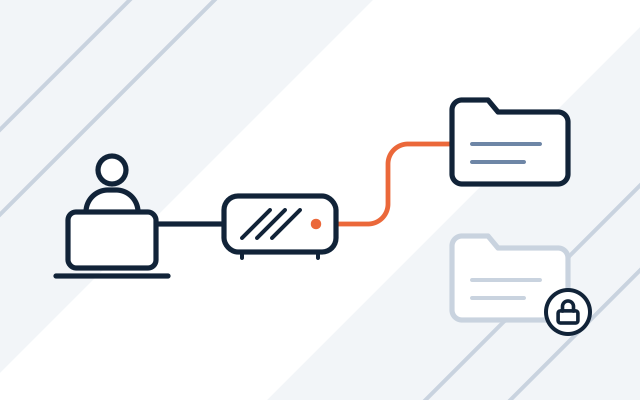
A document assistant must not become a way around permissions. We keep each department's documents in separate collections and assign access to groups from the company directory, such as Active Directory or Microsoft Entra ID. Someone in sales will not get an excerpt from an HR document in an answer.
Model provenance and licences
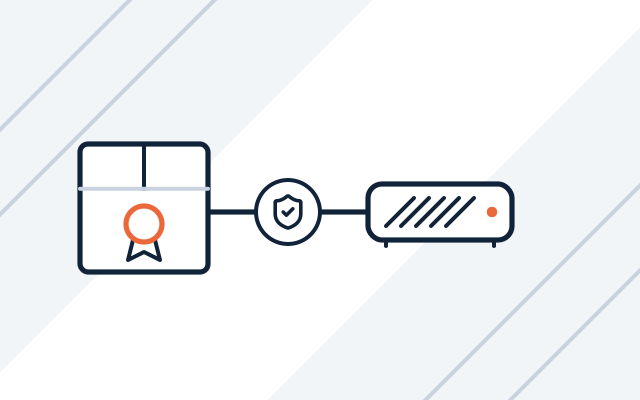
We download model weights from the manufacturers' official repositories and verify the file checksums. We choose the safetensors format, which contains no executable code. We also check the licence of every model and tool, because some popular models and applications prohibit commercial use or require a paid licence.
Network isolation, updates and backups
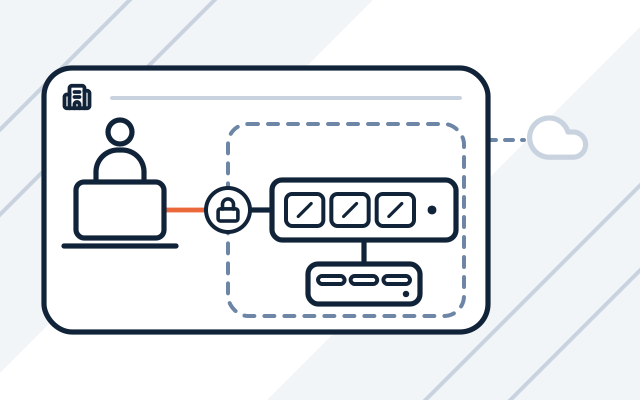
The AI server runs in a separate network segment, accessible from the company network or over a VPN. It connects to the internet only for updates. We introduce a new model only after testing it on a set of your company's questions.
- We update the operating system, drivers, model server and interface on a schedule
- Backups cover the configuration, the document index and user settings
- If something fails, the models themselves can be downloaded again from the manufacturer's repository
How we work
-

Conversation
We ask about your data, your users and the regulations your company is subject to. We agree on what needs to be described before deployment.
-

Free trial
For up to 2 weeks you test a local model on an AI workstation on your network. After the trial we permanently delete the data from the workstation.
-

Secure deployment
We set up permissions, network isolation and logs, install verified models and hand over a technical description of the system.
-

Maintenance
We update the system and models on a schedule, and monitor the hardware and the model server under the contract.
Pricing
Security measures are part of every local AI deployment. We agree on the scope and price after a conversation, and the trial on a loaned workstation is free.
- Local AI deployment with security measures
- Price depends on: number of users and permission groups, type of data, integration with the company directory and a SIEM system, KSC or DORA requirements.
Experience
- Since 2019 we have maintained servers and networks for companies and institutions. Around 1,600 people work on hardware we are responsible for today.
- We deploy and maintain security for businesses: Fortinet and Cisco firewalls, protection for computers and servers, and Microsoft 365 security.
- We sign the framework agreement together with a data processing agreement (DPA).
Security and regulations
-
Personal data in AI queries
Public AI services often process data outside the European Economic Area, which requires a basis for transfer under Articles 44–49 of the GDPR. A cloud AI service provider is usually a processor (Article 28). A local model creates no such transfer, and the model provider does not receive the data. The legal basis for processing and the duty to inform remain your company's responsibility.
Regulation (EU) 2016/679 (GDPR) Legal status as of
-
Data protection impact assessment (DPIA)
According to the list published by UODO, the Polish data protection authority, an impact assessment (Article 35 of the GDPR) is generally required when processing meets at least two criteria on the list. One of them is the innovative use of technological solutions, so an assessment is often required or recommended when AI works with personal data. The data controller carries out the assessment, and we provide the technical description of the system for it.
-
AI literacy of staff
Since 2 February 2025, Article 4 of the AI Act has required companies that use AI systems to take measures that support their staff's AI literacy. Since 27 July 2026 the provision has read as amended by Regulation 2026/1744: the obligation remains, but it does not mean that each person must reach a specific level of AI literacy. As part of the deployment, we train users on how to use the assistant and on its limitations.
Regulation (EU) 2024/1689 (AI Act), Article 4 Legal status as of
-
Prohibited practices
Since 2 February 2025, the AI Act has prohibited, among other things, systems that recognise people's emotions in the workplace, except for medical and safety purposes. This applies, for example, to assessing contact centre agents' emotions from call recordings. We do not deploy such functions.
Regulation (EU) 2024/1689 (AI Act), Article 5(1)(f) Legal status as of
-
Telling people they are talking to AI
Since 2 August 2026, a person talking to a voicebot or chatbot must know that they are interacting with an AI system, unless this is obvious from the circumstances (Article 50(1)). Providers of AI systems that generate synthetic audio, image, video or text mark the output in a machine-readable format (Article 50(2)). For systems placed on the market before 2 August 2026, the deadline is 2 December 2026.
Regulation (EU) 2024/1689 (AI Act), Article 50 Legal status as of
-
The AI Act timetable after the 2026 amendments
Regulation 2026/1744 entered into force on 27 July 2026 and postponed some deadlines. Obligations for the high-risk systems listed in Annex III, such as AI used in recruitment and employee assessment or in creditworthiness assessment, apply from 2 December 2027, and for AI in regulated products listed in Annex I from 2 August 2028. An assistant that answers questions about documents is, as a rule, not a high-risk system, provided it is not used for such decisions about people.
Regulation (EU) 2026/1744 amending the AI Act (Digital Omnibus on AI) Legal status as of
-
Polish Act on Artificial Intelligence Systems
The act has been in force since 11 August 2026, and its provisions on inspections, proceedings and penalties since 28 October 2026. It designates the national market surveillance authority for AI and supplements the AI Act in Polish law.
Act on Artificial Intelligence Systems (ustawa o systemach sztucznej inteligencji), Journal of Laws 2026, item 1003 Legal status as of
-
National cybersecurity system
The amended KSC act has been in force since 3 April 2026. Essential and important entities implement an information security management system, which also covers the security of the supply chain of ICT products and services. An AI server used in processes covered by this system becomes part of it in the same way as other systems.
-
DORA in financial institutions
Since 17 January 2025, banks, insurers and other financial institutions have managed ICT risk and kept a register of contracts with ICT service providers. A cloud AI service is one more provider in that register. A local model does not add one, but the server itself is subject to the same risk management rules.
Regulation (EU) 2022/2554 (DORA) Legal status as of
-
Professional secrecy
Professional secrecy is protected by, among others, the Law on the Bar (Prawo o adwokaturze, Article 6), the Act on Legal Advisers (ustawa o radcach prawnych, Article 3), the Act on the Professions of Doctor and Dentist (ustawa o zawodach lekarza i lekarza dentysty, Article 40), the Banking Law (Prawo bankowe, Article 104) and the Act on Tax Advisory Services (ustawa o doradztwie podatkowym, Article 37). Medical confidentiality is also protected by the Act on Patient Rights (ustawa o prawach pacjenta, Articles 13–14). Trade secrets are protected by the Act on Combating Unfair Competition (ustawa o zwalczaniu nieuczciwej konkurencji, Article 11). In its 2025 recommendations, the National Chamber of Legal Advisers (KIRP) advises, among other things, verifying AI output and checking where a tool processes data and whether it transfers data outside the EEA.
National Chamber of Legal Advisers (Krajowa Izba Radców Prawnych): recommendations on the use of AI tools (2025) Legal status as of
Frequently asked questions
Is local AI GDPR compliant?
Not automatically. A local model does not pass data to an AI provider or outside the European Economic Area, which makes it easier to meet the requirements. Your company still needs a legal basis for processing, must inform the people the data relates to and must assess whether a data protection impact assessment (DPIA) is required.
Does the model learn from company data?
No. Once installed, the model does not change as a result of staff queries. Documents go into an index on a server on your network, which the assistant uses when answering. The index and the logs contain company data, so we cover them with permissions and backups.
Do staff need AI training?
Article 4 of the AI Act requires companies that use AI systems to take measures that support their staff's AI literacy. Training is the simplest such measure. The provision does not require each person to reach a specific level of AI literacy. As part of the deployment, we train users on how to use the assistant and on its limitations. A company-wide programme is best based on your AI use policy.
Is a data protection impact assessment (DPIA) needed when deploying AI?
Often, yes, when the AI processes personal data. The data controller decides, ideally with the data protection officer. For the assessment we provide a technical description: where the data is, who has access to it, and what logs and safeguards are in place.
Does a voicebot have to say that it is AI?
Yes. Since 2 August 2026, Article 50 of the AI Act has required that the person on the call knows they are talking to an AI system, unless this is obvious from the circumstances. The voicebot says so at the start of the call.
Who has access to the data when you maintain the system?
Only the people you give access to. If we have access to personal data during maintenance, we act as a processor. We sign the framework agreement together with a data processing agreement (DPA).
Will you prepare an AI use policy?
We help with the technical part: we describe how the system works, where the data is and who has access to it. Your company prepares the content of the policy and the legal assessment with a lawyer.
See also
-
Free AI workstation trial at your company
An AI workstation on your network for up to 2 weeks, free of charge and with no obligation to buy. After the trial, a report with the results and a hardware recommendation.
-
Meeting and call transcription without the cloud
Recordings of meetings and calls turned into text and a note with tasks, on hardware on your network. You can check the quality in a free trial.
-
Cybersecurity services for businesses
Firewalls, VPN, protection for computers and servers, and Microsoft 365 security. We start with a security review.
-
Microsoft 365 security for businesses
We review and secure Microsoft 365. We enable MFA and Conditional Access, protect email and deploy Intune and Defender.
From our blog

Language model vs AI chat: how ChatGPT differs
ChatGPT is an application, and the language model is the engine inside it. We explain the difference and which models a company can run in-house.